


The Man without a CV, and the Man with a Charge Sheet of History

Rahul Gandhi, Ramachandra Guha writes, “lacks discipline, gravitas, and a curriculum vitae.” The phrase gives away more than it proves. It carries an old anxiety of the Indian liberal class: that politics, unless stamped by office, portfolio, and administrative polish, remains suspect.
By Narendra Pachkhédé in London
Ramachandra Guha’s charge against Rahul Gandhi has the virtue of bluntness and the impatience of long exasperation. It also has the defect of making a political crisis sound like a failed job application.
Rahul, he writes, “lacks discipline, gravitas, and a curriculum vitae.” The phrase gives away more than it proves. It carries an old anxiety of the Indian liberal class: that politics, unless stamped by office, portfolio, and administrative polish, remains suspect.
India has never lacked individuals with credentials. It has had ministers, secretaries, commissioners, chief ministers, party presidents, governors, reformers, fixers, technocrats, saints in khadi and predators in khadi. It has produced men and women who know how to enter a room, chair a meeting, sign a file, speak of order, and call it public life. The republic’s problem has rarely been an absence of authority. More often, it has been what authority permits itself to do.
A politician’s CV cannot be written like a management profile. It must be written as a public reckoning.
What did power damage?
What did it license?
What did it make normal?
Whom did it frighten?
Whom did it flatter?
What did it do to the citizen’s sense of himself?
A State can build roads and diminish freedom. It can deliver welfare and degrade citizenship. It can praise efficiency while it hollows out the institutions through which citizens correct power. To read a political CV properly is to read the injuries folded into achievement.
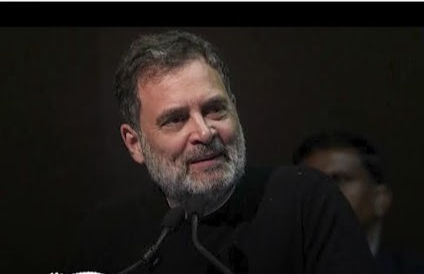
Rahul Gandhi’s Unfinished Record
Guha’s impatience with Rahul is not baseless. Any serious defence of Rahul must begin by admitting how much he has failed to build.
The Congress did not decline by accident. Its organisation became lazy, courtly, intermittent, self-protective. Its state units move without gathering force. Its local leadership lost muscle. Its habits stayed feudal long after its social base had changed.
Rahul himself has often been exasperating: present with force, absent when force needed continuation; alert to the right question, weaker at building the machine that could carry the answer. He has spoken of caste census, unemployment, crony capital, institutional capture, and constitutional fraternity.
Yet, speech, in politics, must travel into structure or it evaporates.
Rhetoric has its place; it can name the injury and summon a public. But unless it becomes organisation — cadres, candidates, alliances, discipline, local trust — it remains air stirred briefly by conviction.
Actor, playwright, theatre-person, filmmaker Girish Karnad’s Tughlaq refuses the innocence of high intention. Intelligence, reformist speech, even moral imagination can ruin a polity when they cannot acquire form. Vision without organisation becomes theatre; sincerity without institution becomes drift.

Rahul’s defenders should not evade this. A politics of repair cannot live on moral vocabulary alone. It needs cadres, provincial authority, ideological schooling, alliance craft, and the slow work of building confidence where suspicion has settled.
But Guha’s formulation turns incompletion into vacancy. Rahul Gandhi’s political record is not blank. It is uneven, privileged, belated, often irritating. It is also real.
It contains refusal: refusal to become a softer version of Hindu nationalism; refusal to turn cruelty into resolve; refusal to describe India as a Hindu civilisational estate with minorities living on sufferance; refusal, at least in his better moments, to accept resentment, spectacle, and insult as the only available grammar of politics.

That refusal does not make him a natural prime minister. It does make him politically intelligible. The Bharat Jodo Yatra did not rebuild the Congress, nor did it dissolve the BJP’s organisation. It did not turn sentiment into durable local power. Still, it changed the scene.
It returned sweat, fatigue, encounter, and distance to a politics reduced to screen, clip, slogan, and command performance.
Walking is not governance. But in a country where power increasingly speaks from height and distance, walking restored the older democratic fact of contact. That, too, belongs to a political CV, though it does not fit the bureaucratic imagination of seriousness.

The Bureaucracy of Decay
Great novelist Shrilal Shukla would have understood the danger of that imagination. Raag Darbari remains the great Indian novel of procedural decay. Its terror lies in the fact that everything functions.
Registers are kept, meetings occur, schemes are announced and leaders speak. Institutions survive as shell, habit, performance, and joke. Rot does not always burn the building down. It occupies the building, learns the rules, quotes the rules, and uses them to exhaust the weak.
Shukla understood that, in India, cynicism often wears the costume of procedure. The file moves; justice does not. While the committee meets; the citizen vanishes.
Theatre practitioner, playright and poet Bertolt Brecht made the same point in another register.
Brutality does not always appear as barbarism. It learns respectability.

It finds a microphone, hires clerks, speaks of order, and discovers the comfort of procedure. Novelist Franz Kafka, in The Trial, supplies the final image. When the State becomes a maze of files, summons, cases, permissions, and punishments, to ask only whether the opposition leader has a CV is to mistake the desk for the republic.
When even institutions such as the Election Commission are drawn into disputes over executive preference and constitutional distance — concerns serious enough for the Supreme Court to warn of the “tyranny of the elected” while hearing challenges to the appointments law — they too enter this bureaucratic theatre of power.
The person with the fuller administrative record may have caused the deeper public damage. Office tells us where power sat, not what power did. A post confers no moral meaning by itself. It may even hide the crime by giving it a desk.

The Charge Sheet of Power
By that measure, Narendra Modi’s CV cannot be reduced to chief minister and prime minister. That is the clerical version. The political version is darker. It includes Gujarat, not as ritual accusation, but as the first great injury around which a career of majoritarian consolidation hardened. It includes the conversion of economic aspiration into moral laundering. It includes a prime minister who has made monologue a substitute for accountability.
It includes the press conference not held, the question not taken, the journalist marked as enemy, the university disciplined, the civil-society group squeezed, the ED, CBI and income-tax machinery moving like weather over opposition terrain.
It includes Manipur, where the language of national strength met the silence of State failure. It includes the bulldozer’s promotion from municipal machine to political metaphor. It includes the remaking of citizenship as dependency, where the citizen is cast less as bearer of rights than as grateful beneficiary. It includes a public culture in which fear is useful, humiliation circulates, and cruelty can be sold as decisiveness.
If this is a CV, India must ask what kind of achievement has begun to impress it.
The Mahabharata gives us an older and sterner standard. Bhishma has everything a worldly CV could admire: lineage, discipline, sacrifice, command, experience, self-denial, solemnity. Yet, the epic does not forgive him by counting his virtues. His tragedy is stature without rupture. He sees too much and still stands where he stands. He becomes the awful proof that gravitas can turn into complicity when it refuses the risk of moral break.
What did you enable?
What did your silence protect?
What did your discipline serve?
What did your authority make easier for others to inflict?
Guha has written against Modi with clarity elsewhere, which makes this present insistence more puzzling. His error is not that he criticises Rahul Gandhi. Rahul should be criticised; Congress deserves harsher scrutiny still.

Guha’s error is that he treats Rahul’s inadequacy as an explanation for Modi’s power, while under-reading the coercive ecology in which opposition now operates. The Congress is dynastic; therefore it explains the BJP’s consolidation. Rahul is inadequate; therefore Modi’s dominance appears almost inevitable. The opposition has failed; therefore the regime’s success begins to look like the opposition’s fault.
There is truth here, but too little truth arranged with too much confidence. The Congress has enabled Modi by weakness, vanity, and decay. In the late 1990s, warnings about Modi were often brushed aside in Congress circles as concern over a regional satrap. But weakness is not authorship. Failure to resist a storm is not the same as making the storm. To place the crisis of the republic chiefly at Rahul Gandhi’s door is to ask why the injured man did not run faster while speaking too softly of the machine that injured him.
A serious criticism of Rahul would be harsher and more useful. Can he convert refusal into organisation? Can he allow leadership to grow outside the family circle? Can the Congress stop treating revival as inheritance and begin treating it as construction? Can the energy of the yatras become block committees, district leadership, candidate selection, political education, and coalition trust? Can Rahul accept that symbolism opens a door but cannot build a house?
These questions bite harder than the complaint that he lacks a CV. They also place responsibility where it belongs: on Rahul for what he has failed to build, on Congress for what it has allowed to decay, and on Modi for what he has done with power.
For what is Modi’s “experience” if read without intoxication? It is not mere administrative ascent. It is the disciplined fusion of party, state, media, capital, religious injury, welfare dependency, security rhetoric, personal charisma, and revanchist grievance — the politics of revenge dressed as restoration. Its genius lies in making domination feel like order. It has trained millions to mistake centralisation for strength, spectacle for governance, vendetta for accountability, and silence for national unity. These are not blemishes on a successful career. They are part of the career.
The title, then, is almost forced upon us. Rahul Gandhi is mocked as the man without a CV. Narendra Modi is the man with a charge sheet of history. One has not proved he can rebuild a party equal to the republic’s peril. The other has proved, with chilling discipline, how a republic can be bent until dissent itself begins to look abnormal.

India is not choosing between a perfect democrat and a competent administrator. That is a nursery tale for television. It is choosing between an unfinished opposition and a completed method of power. The first may fail because it cannot acquire form. The second succeeds by deforming the common life.
Those warnings leave Guha’s curriculum vitae looking like the wrong instrument: too clerical for a republic in danger, too impressed by office to ask what office has done.
A politician’s CV is not what he has held. It is what he has done to the republic, and what he has refused to let the republic become.
Narendra Pachkhédé is a critic, essayist and writer who splits his time between Toronto, London and Geneva. His latest book is Form as History: When History No Longer Requires Us--Daraja Press, 2026.
Photos of Rahul Gandhi -- courtesy indian national congress / Instagram