


Sadness stalks the RED SOUL of Palakkad
Updated: Feb 8

With even the famous Kerala monsoon unable to create ground water, the traditional Palakkad Red Matta rice is falling prey to the vagaries of the weather and climate change, with farmers preferring high-yielding hybrid varieties.
By Yadukrishna C S in Palakkad/Kerala
Palakkad district, bordering Tamil Nadu and on the tip of the Western Ghats, is often referred to as the "Gateway to Kerala". The district is well-known for its proximity to the scenic Silent Valley National Park, which is part of the Nilgiri Biosphere Reserve. Additionally, Palakkad is famous for its array of ‘Palakkad Iyer’ dishes, a distinct blend of Tamil and Kerala flavours.
Integral to the local cuisine and part of Palakkad’s identity is the Red Matta rice, grown locally. Unfortunately, this traditional rice variety, once favoured even by royalty, is now at risk due to climate change and unpredictable weather patterns.
Narayanan (71) and Prabhakaran (68) are two brothers from Chittur in Palakkad. The traditional Matta rice, popularly known as the “red soul of Palakkad”, has been both a symbol of cultural heritage and their bread and butter for decades.

However, now, with hybrid varieties of Matta making their way into Kerala’s markets -- delivering yields triple that of the traditional Palakkad Matta -- many farmers are chasing bigger harvests to offset growing climate risks and rising input costs.
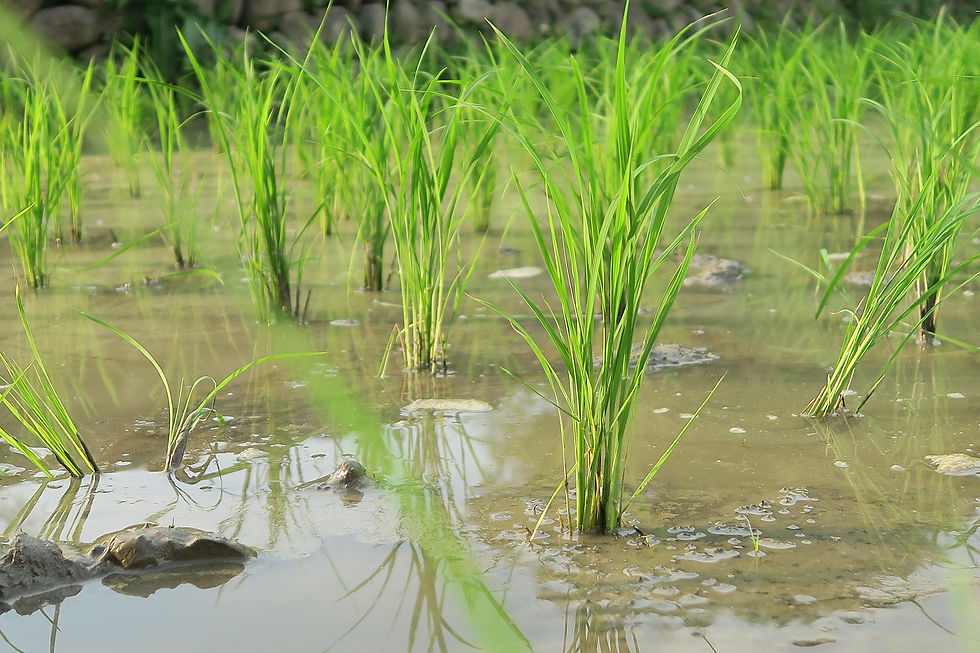
“Groundwater is barely available; we pump water into our paddy from the river using a motor,” says Narayanan says, his tone laced with indignation at what he felt was unfair treatment by the “rain gods.” Kerala’s monsoon rains are failing to offset the annual deficit. The state has shifted over the decades from a wetter to a drier humid-climate band, a change that researchers attribute to repeated forest fires in the Western Ghats, particularly in Palakkad district.
Researchers at Kelappaji College of Agricultural Engineering in Tavanur, located in the neighbouring Malappuram district, have observed a significant decline in groundwater levels over the past three decades in Chittur Block where Narayanan and Prabhakaran grow paddy. The decline has been attributed to erratic rainfall patterns and rising temperatures.
Some pockets registered a fall of up to 5 meters due to heat-baked soil and spotty monsoons in a rain-shadow terrain that failed to recharge the aquifers. Wells in the northern and northeastern parts of Palakkad district have shifted from being stable to chronically stressed over the past 29 years. Pre-monsoon depths often reach 9 to 17 meters below ground, according to the Kelappaji College study.
Good monsoon years still bring relief, with water levels bouncing back to between 2 and 13 metres. But the pre- to post-monsoon gap, stretching up to 10 meters in lean years, has widened into a hydrological whiplash.
Consequently, many farmers are now adopting hybrid varieties of Matta that are more resilient to climate and pest pressures, though they fall short of the nutrient richness that the traditional Matta provides.
The Kerala Agricultural University (KAU) is at the forefront of developing new Matta varieties, with ‘Aadhya’ being the latest popular entrant in the market, which provides a productivity of 6500-7000 kg/ha. Unlike traditional Matta farmers in Palakkad who save seeds for the next season, hybrid varieties are readily available through market retailers and KAU’s factory outlets.
“The high-yield characteristic of hybrids has made farmers switch to them. Yields are more than triple what the traditional Matta can offer,” said an associate professor at KAU. “Farmers now look for high yield and low input costs,” he added, noting that the nutrient value of hybrids remains lower compared to traditional varieties.
Hybrid paddy varieties were first introduced in Kerala in the 1960s, increasing crop yields but also raising concerns about their long-term effects on public health. Farmers in Palakkad continued to reserve traditional Mattas, such as Thavalakannan (frog’s eyes) and Chemban, for household consumption. This practice persisted even as many adopted hybrid varieties, stemming from a generational habit and a belief in the superior nutritional value of traditional crops.

A study by agricultural scientists H. Athira and N. Kishore Kumar attributes the decline in traditional Matta cultivation to land degradation, erratic rainfall, groundwater depletion, low productivity, chemical pollution, and climate change, many of which are beyond farmers’ control. The area under traditional Matta has shrunk 43% from 1.45 lakh hectares in 1990 to 0.83 lakh hectares today.
Local Palakkad rice varieties like Black Njavara, and Golden Njavara are known to outshine hybrids nutritionally. Similar to Pokkali rice which is grown which is grown in coastal areas, a 2018 KAU study ranked Palakkadan Matta highest in fibre and protein, and lowest in carbohydrates. It is thus better suited for diabetics and high blood pressure patients to hybrid rice
Palakkad has more than six major paddy blocks, which are divided into high- and low-productivity zones. Nenmara and Chittur are classified as high-productivity blocks, featuring larger cultivation areas compared to the others. In the Kanjikode area of Nenmara alone, over a dozen rice mills operate, many of which focus on procuring hybrid rice for export to the US, UK, and Middle Eastern markets.
For over a dozen farmers, including Prabhakaran and Narayanan, the traditional Matta rice represents more than just a crop. It embodies the “taste of rain and soil,”--Kerala’s own rice, steeped in generations of tradition.
Yadukrishna C S is a Chennai-based freelance journalist.