


Our Stories Are How We Cry For Justice

If you also love stories, the next time you read a book, or watch a movie, try to analyse the story through a lens of justice. It will give you a new perspective.
By Tarun Byaragi
When I walked out of the theatre after watching the Mohanlal starrer, L2: Empuraan, I was blown away. But then I learnt the film had received largely lukewarm reviews from superstar Mohanlal’s most ardent fans.
I wanted to understand why. What was the cause of disappointment? More importantly, why did I enjoy the film so much despite its many flaws?
(L2: Empuraan, meaning Overlord, released recently with great expectations, is a Malayalam-Indian action thriller. It is directed by Prithviraj Sukumaran and written by Murali Gopy.)
The search for answers took me down a rabbit hole that helped me rediscover my love for stories. And in return it made me ask even bigger questions:
What do we look for in our stories?
Why do stories matter to us?
And it led me to this one answer.
All our stories are all about justice.
No story is ever told in a vacuum. It is always about someone, living somewhere, at some point of time, trying to achieve something, or at least yearning for it, passionately, or otherwise. Irrespective of scale, this is always true.
Frodo Baggins in The Lord of the Rings is travelling to the worst place on Middle-Earth to save the world from the clutches of evil; an unlikely hero on his grand quest. Au contraire, Santiago, the eponymous old man in Hemingway’s The Old Man and the Sea is a fisherman trying to catch a giant marlin. It’s a seemingly ordinary endeavour that also becomes an epic battle in its own right.
These two stories could not be more different. However, when you look closely, you will see how both Frodo’s and Santiago’s are journeys seeking justice.
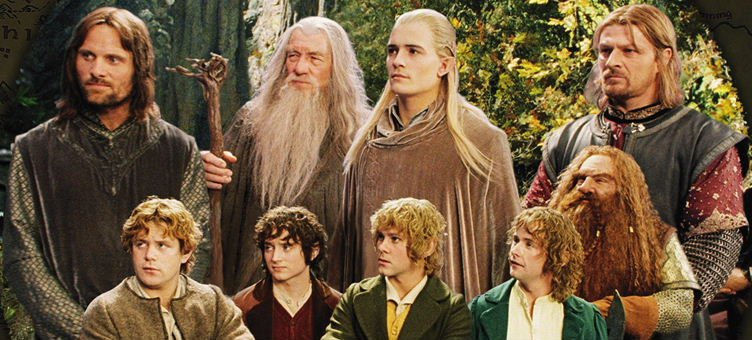
Frodo’s justice is external. Having grown up in the idyllic Shire, he understands that the world is worth protecting. He also knows that there is nothing more unjust than the tyranny of evil. To quote his best friend, Sam Gamgee, “There's some good in this world, Mr. Frodo, and it's worth fighting for.”
Santiago does not want to save the world, just his ‘way of life’. Santiago catches the marlin; but before he can haul it home, sharks devour it, leaving only the head, skeleton and tail. The sharks represent the big fishing companies who are consuming the livelihood of fishing communities and leaving them bone dry. At the end, Santiago is unable to get the justice he sought.
These two stories are perfect examples of the two kinds of resolutions that are commonly seen in stories. Stories of the more commercial nature, which involves a rising action, proactive protagonists, usually end up with achieving justice. The other kind of stories are poignant and observant of the human condition. As such, they are reflections on the miscarriage of justice. A few popular examples are Neeraj Ghaywan’s Masaan, Anurag Kashyap’s Ugly, or Jesse Eisenberg’s A Real Pain.

Of course, justice is not achieved in every commercial story. In Roman Polanski’s Chinatown, in David Fincher’s Se7en, or in Nagraj Manjule’s Sairat, the villains succeed in delivering their own brand of injustice. Similarly, there are plenty of reflective movies where the heroes finally triumph and get justice. Frank Darabont’s The Shawshank Redemption is a beautiful example.

Even in a hero’s journey, triumph over evil is never an easy path. Usually, the hero who is seeking justice, is torn due to internal conflicts and turmoil. This is true for Frodo Baggins, for Superman, and also for Arjun from the Mahabharata.
This is the blueprint for all good vs evil stories. For what is evil, if not the executor of injustice?
As audience members, we want our heroes to win, but we also want them to not succumb to their inner turmoil. Because that would be a tragedy! Just like the story of Hamlet.
In stories involving police, detectives, or lawyers as protagonists, the entire plot usually revolves around delivering justice to those who deserve it. Whether it is Tony Shalhoub as the fictional Adrian Monk (in the TV series, Monk), or Chadwick Boseman embodying a young Thurgood Marshall (in the biographical film, Marshall, 2017), what they are seeking can be summed up in one line: punishment for the guilty and freedom for the innocent.
Are all stories about seeking justice?
I would argue that they are. Justice, in a broader sense, means different things to different people. Zoya Akhtar once said, “The ultimate fantasy in India is to see a boy or girl fall in love and end up happily. Love stories will always be big in our films till our culture changes.” When it comes to Indian romance stories, the biggest injustice occurs when two people in love are stopped from being together. Sometimes the people preventing the lovers are the parents, e.g. Aditya Chopra’s Dilwale Dulhania Le Jayenge. Sometimes it is the family members symbolising larger social evils, like in Sairat.
Well-written romance stories from each culture have something to say about the people, society, and the customs of that culture. Pride and Prejudice, published in 1813, spoke about the difficulties of finding true love amidst the social customs that obliged young women into marrying for money. Celine Song’s Materialists shows a young woman confronting her own materialistic prejudices before rekindling an old relationship. In both these stories, the audience wants the protagonists to make the choices that we will not, or cannot make ourselves.

We live vicariously by rooting for the justice of lovelorn hearts.
Is justice gendered?
There is a prevalent notion that action films are primarily for men, whereas most women enjoy stories with romantic or emotional themes. This is a gross generalisation. However, there is some truth to it.
It seems that the majority of men find it rather easy to relate to macho, action heroes, and the blood, gore and violence on celluloid. Not so much because they believe they can be these heroes. Rather, it is a particular brand of retributive and punitive justice that fascinates their male imagination.
Most men seem to be raised with the ideals of masculine strength, power, superiority. In the orthodox, male-centric worldview, they have to be the so-called ‘protectors’ of their families, of those who are meant to depend on them. This notion is reinforced during the formative years of a young person by cinema where heroes defeat villains in pursuit of justice.

These mythical silver screen heroes are idolised. But reality sets in once they are old enough to understand that there are ‘no easy villains’ in the real world. There is no one to beat up for the injustices, cruelties, and inconveniences in the world. When there is someone to blame, they are too big and too powerful or simply too elusive for an ordinary person to vanquish. Not to mention, no one has the time to stop working for their livelihood, and start playing the hero.
This is why men live vicariously through their action heroes. As the larger-than-life characters deliver on screen justice, they find it voyeuristic, cathartic.
For women, justice means something else entirely. In a patriarchal society defined by its gendered roles, it should not be surprising that it is perceived that a man would seek justice out in the world, whereas a woman seeks it within the bounds of her home, or domestic space.

Some women wish for an education. A creative life, without the shackles of dogmas and compulsive rituals and rules. A meaningful career. Professional and private independence. Others yearn for the freedom to live and love. Many are still waiting for the ‘permission to dream’.
A great many who want to become wives don’t want an unpaid servitude for their in-law’s household. Some have no desire for matrimony, but they do it to simply shut their families up. Some want to experiment with their lives in the hope of discovering which version they like the most. But they are constantly judged, cornered, and shamed for their choices.
Who delivers injustice for these women?
Sometimes it is the father who treats them as lesser than their brothers. Sometimes it is the mother who raises them to be the ‘ideal woman’ -- subservient, obedient, devoted to the family, and its imposed rules and order. Sometimes it is the society in general, which treat only her womb and physical beauty, and her domestic skills, as the defining characteristics of her individuality; not her intellect, talent, academic and professional achievements, aspirations and dreams.
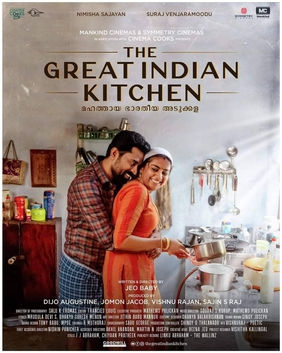
In Jeo Baby’s The Great Indian Kitchen, the cooking space becomes a prison for the unnamed protagonist. Her days of household chores are laborious, tiresome and cyclical. Jeo Baby does not shy away in pointing out that this injustice is the very foundation of a patriarchal household.
In Bonnie Garmus’s Lessons in Chemistry, Elizabeth Zott is a gifted chemist looking to make a name for herself. But everywhere she goes, she is either belittled for being a woman, or assaulted, or both. The book ends with her finding the justice she so desires throughout the story. And what does it entail: the same respect her male counterparts get without even asking.

This is why women seem to be more interested in stories about women told by women, no matter how imperfect. Or, meaningful cinema with a story, a script, fine cinematography and music. Besides, most action movies, at least in India, are about one man fighting ten men to protect a hundred men, while women just act as plot devices, scantily clad item girls, or for voyeuristic pleasures.
Why would any woman be interested in such stories?
What about more complex stories?
As stories get more nuanced, we see a more complex version of justice emerge. In Bong Joon Ho’s Mother, a mom tries to protect her intellectually disabled son. We begin the story rooting for her. But, as the story continues, she commits evil acts for her child and we are shaken to our core.
In Jeethu Joseph’s Drishyam, the protagonist and his family kill and hide the body of a minor. Yet, some of us cheered for them when they get away with it. So, in the sequel, Joseph shows that the protagonist will always have the fear of getting caught. He will never have peace. The justice he wrestled away from fate is not permanent.
In Sibi Malayil’s Kireedam, the protagonist walks a path where his righteousness and courage brand him as a criminal. No matter how much he tries, he cannot find a recourse. His just actions bring him injustice and that is the point of the story.
Of course, there are plenty of stories with no discernible sense of justice. Steven Spielberg’s Raiders of the Lost Ark falls into this category. As does Khalid Rehman’s Thallumaala. These films are remembered more for their action, humour and music, and not due to their thematic underpinnings.
There is also a category of films where justice is sought from an authoritarian perspective. DW Griffith’s The Birth of a Nation, or Leni Riefenstahl’s Triumph of the Will are popular examples that come to mind. However, these films are also merited for their cinematography and music, while thoroughly criticised for being
voices of injustice.
So what does any of the above have to do with L2: Empuraan?
Well, the answer is as stated above: justice.
The box office successful film’s opening credits show a burning train which is immediately followed by the massacre of a community. The director apparently intended this film to be a depiction of the Gujarat pogrom, 2002. According to reports, after the Centre’s intervention, the CBFC asked the makers to re-edit the film, and 17 cuts were suggested. The film producer agreed to do that, so that the film could be released thereafter. However, to any intelligent viewer, it is transparent what the on-screen mass murder is meant to represent.
A teenage boy, Zayed Masood, loses his entire family in the violence. Mohanlal saves him from becoming a ‘radical militant’. The film ends with Zayed getting justice, by punishing the man who killed his family.
If you have watched Rakesh Sharma’s famous documentary, Final Solution, you will have some idea of the scale of the violence of the Gujarat pogrom. There are several media and other documented reports on the issue, including well-known film documentaries.
However, no mainstream cinema has covered this dark chapter in Indian democracy for whatever political reasons. Nandita Das’s Firaaq and Rahul Dholakia’s Parzania are both sensitive and reflective movies on the subject. However, in L2, Prithviraj Sukumaran, the director, screams for justice for the victims, and shows his character, Zayed, achieving it through the most accessible art form in India: commercial, box office action cinema.

This is why the film moved me. Despite its questionable pacing, its overabundance of slow motion shots, and logical loopholes in the screenplay, L2 manages to create a huge impact.
This is why our stories matter to us.
At the end of the day, we are all looking for justice.
Our stories are how we cry out for it!
It is how we pass on a culture of righteousness. And weep in joy when it is achieved. And feel sad when our heroes pay a heavy price for it.
If you also love stories, the next time you read a book, or watch a movie, try to analyse the story through a lens of justice. It will give you a new perspective.
If you are a storyteller spinning new narratives, ask yourself this:
Whose justice are you seeking?
And what does that justice look like?
Tarun Byaragi is a novelist, screenwriter, storyteller and educator based in Bangalore, India. A media scholar with a decade of industry experience, his real passion lies in stories and their significance to human culture and society.