


NOTHING ROMANTIC about impunity

What happens to a society when brutal force is displayed with this kind of confidence, arrogance and impunity?
By Narendra Pachkhédé in Toronto
Minneapolis has become hard to misread.
Between George Floyd’s murder and the deaths bracketing a fresh chapter—Renée Nicole Good on January 7, 2026, and Alex Jeffrey Pretti on January 24—the city is not uniquely damned or’“worse’, but exposed. It is a place where force tests itself in daylight, then covers its tracks in prose.
The line between policing and prowling is crossed without shame, then made respectable by jurisdiction, procedure, and grammar that hides agency.

That exposure is felt in how the story arrives now. The story does not come as a single account for reflection.
It comes instead as churn: dispatches, clips, reels, livestreams, official statements, and counter-statements. Minneapolis reaches the public as internal weather—another alert that slides across attention. The feed does not seek understanding; it seeks only pace.
Reporting becomes a catalogue, discouraging lingering.
Stops turn menacing.

Detentions.
Violence near children. Against children.
A five-year-old boy detained in an unknown place and used as ‘bait’ to get his father. A ten-year-old girl kept in a Texas detention centre far away from home.
Raids renamed “operations,” bodies renamed “incidents.”
A woman going to the neurological doctor dragged out brutally by a huge male ICE agent, masked and armed, from her car – her side window behind smashed. She is shouting I am disabled, but they don’t care. She says in a public broadcast, now viral on Instagram, that in the detention centre all those picked up are called ‘bodies’. That is, as living beings, and US citizens, they are already referred as bodies. Dead and alive at the same time.
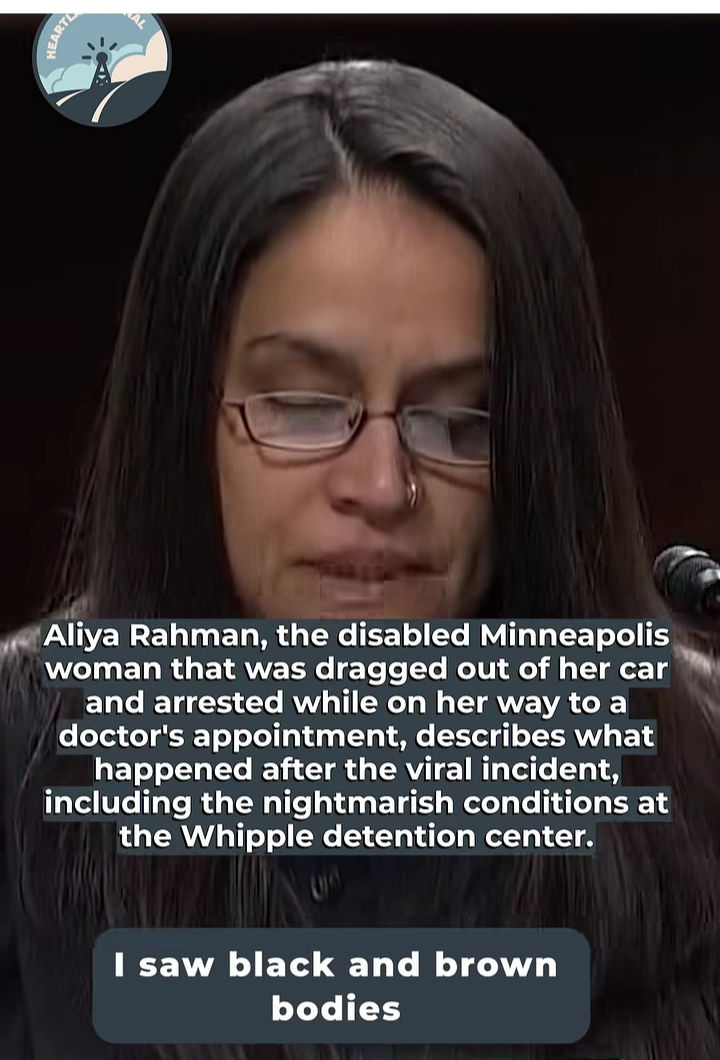
The list instructs. It trains the reader to stop holding each item separately and instead exist in accumulation, until accumulation itself becomes the message.
Impunity as Method
Call it what it is: impunity. Not lawlessness, but an expectation that consequence can be managed, postponed, dissolved into process. Impunity is when power no longer persuades; it only proceeds. Not absence of rules, but their uneven gravity. Some bodies are bound; others invoke them as a charm.
The country’s defense against that is classification. Pundits rush to taxonomy: fascism, authoritarianism, regime shift, bad season. The discussion falls back on history and a sheen of seriousness, but it becomes a soft landing for debate, with facts presented as “still coming in,” “we don’t yet know,” “authorities say,” and “sources say”.
Labels are endlessly refined as the simpler point goes untouched: the state has learned to proceed as a roaming threat and remain, in official language, respectable.
Impunity does not ask for consent. It asks for acclimatization. Violence occurs, and the response is management: an investigation promised, a review announced, a press conference offered instead of consequence. It asks the public to live with the state’s ability to bruise, detain, menace, kill, and then narrate. Narration is not commentary; it is ruled by other means.
A mid-January Tuesday night shows resistance as pressure, not performance. Downtown noise hits the glass: horns, drumline, whistles, chants rising, like steam at hotel windows where ICE agents are believed to stay. Sleep becomes refusal.
The crowd is also infrastructure: neighborhood Signal threads for rapid response, patrol chats assigning eyes to blocks, and sightings circulated quickly to disrupt intrusions before they harden into routine.
The faces skew young. Not a romantic note; it is structural. Many were teenagers in 2020, old enough to absorb Floyd’s footage as initiation, young enough to refuse injustice made tolerable by context. In the freezing cold, the crowd moves to stay warm. Chants fracture and rebuild. Eyes scan intersections. Phones lift, witnessing a civic reflex.
Because this is how the city is now, what is watched is the battle for the clip. A phone screen buffers. The caption hardens into a verdict before the mind can catch up; comments arrive as verdicts: “graphic,” “fake,” “context,” “he reached.” Before the body in the video becomes real, language claims it. Evidence survives only if it survives compression.

Minneapolis carries 2020 not as a slogan but as a reflex. Crowds know how to move, record, and read a line of armored bodies for what it will become in ten minutes. Not nostalgia. Not repetition. Something colder, more useful: a refusal to grant the state the benefit of the doubt.
This is how Minneapolis becomes more than a city in distress. It is a lesson about how reality now arrives.
The Split-Screen Republic
America does not meet the event first; it meets the broadcast. Minneapolis becomes a place both inhabited and consumed. The street is never only the street but also footage. Death is a human rupture and a clip competing for attention.
On one screen, the Department of Homeland Security sold nurse Alex Jeffrey Pretti as a “domestic terrorist.” On the other hand, footage shows an ICU nurse holding a phone, trying to help, and the media dutifully turning a bullet into a narrative.
Don DeLillo understood this before it acquired a name. The medium is not a channel; it is an atmosphere, sealed and self-regarding, teaching the country what it is allowed to feel. In White Noise, it becomes “sealed-off… self-contained, self-referring”. The line reads like satire until it starts to sound like a diagnosis, a nation no longer sure whether it is being informed or being trained.
America now lives in a split-screen.
On one side, raw footage: phones shaking, bodies pinned, people screaming instructions nobody follows, children crying because children always know when authority is no longer protective.
On the other hand, the studio is a calmer world where violence is translated into “context,” where death becomes debate about procedure, where the question is not what happened but what the public is allowed to call it. Then the tone shifts. “We’ll be right back,” and the panel returns to adjudicate suffering like a contestable claim.
Split-screen is not merely a media format. It is civic architecture. It paces outrage, assigns attention, and teaches the public when to move on. Because the screen requires novelty, suffering becomes renewable, today’s killing processed into content, tomorrow’s into counter-content, until the public learns, without anyone saying it aloud, that consequence is optional.
Tone governs at a distance. Hosts teach which deaths are “tragic,” which are “complex,” which are “under investigation,” as though moral weight depends on whatever story can be made to fit.
If Minneapolis reedits the national condition, it is because the city has already lived through the test case of visibility. 2020 mattered not because it offered America a “conversation,” but because it offered exposure: force in public, sustained, unhurried, defended by the grammar of authority.
The most consequential lesson was not what people saw. It was that seeing did not automatically bind power. Even with duration, even with the world watching, the consequence had to be fought for.
This is why it is dishonest to treat the current moment as a novelty attached to a single administration. The appetite for impunity is older than any regime and more durable than any election. Different governments intensify it, dress it in different rhetoric, aim it at different targets, but the temptation is structural: to make the public endure what it once would have refused, and to call endurance “stability.”

If a word is needed for what this is not, it is not a dictatorship. That term is too neat, too cinematic. Dictatorships announce themselves as total.
What spreads here wears the face of exception: a tragedy, a misunderstanding, a split-second decision, an ongoing review. Each phrase is a small sedative. It lets the citizen believe the system is intact while the system learns how far it can go without paying.
James Baldwin named the fantasy that makes this possible: “It is the innocence which constitutes the crime.” Innocence here is an exemption, the insistence that power can harm without being implicated, that it can return to the scene of harm wearing the mask of necessity and be welcomed back as protector. That innocence is heard in the way each episode arrives pre-softened: complicated, regrettable, under review. Anger is treated as a bigger breach than violence, and the citizen is allowed grief and never allowed interruption.
There is another cost, quieter and more corrosive.
Solidarity becomes expensive.
Witnessing becomes risky.
Filming feels like gambling.
Helping feels like exposure.
A society that penalizes courage can keep calling itself a democracy, but its public life begins to resemble management, a population trained to keep its head down and call it prudence.
Impunity is not simply “getting away with it.” It is an atmosphere in which violence can occur without consequence or shame. Law becomes décor. Procedures remain, statements accumulate, while the consequence is postponed into a corridor where it eventually disappears. The machinery meant to bind power gets repurposed to shelter it.
Gaza as Template
To treat Gaza as an analogy is to miss what has been done to the moral imagination in plain sight. Gaza has been a conditioning ground: visibility without constraint, atrocity as content, condemnation without interruption.
The point is not an identical scale. The point is the mechanism. The world can watch a people being crushed and still treat action as optional. The image brings pain near while keeping obligation at a safe distance.
Susan Sontag warned against the comfort taken in a collective gaze: no “we” should be assumed when the subject is looking at other people’s pain. Compassion, she insists, needs to be translated into action or it withers.
The screen offers endless invitations to feel and almost no scaffolding to repair. In that gap, numbness grows, not because people are cold, but because people are tired.
What happens to a society when force is displayed with this kind of confidence?
Reality becomes contested terrain, not because disagreement is new, but because evidence no longer feels like it binds anything. People stop asking what happened and start asking which story will win. Language becomes battleground: “public safety,” “self-defense,” “procedure,” “operation.”
Phrases that should describe become phrases that absolve. Legality starts impersonating legitimacy. Violence is laundered into hygiene.
Five years ago, the world watched a man pinned beneath a knee and said “accountability” as if saying it were the same as building it. Now Minneapolis circulates again as a sequence of images: masked agents, zip ties, pepper spray, gunfire, crowds turning breath into chants. Each clip arrives already inside an argument, each “update” competing with its own debunking, each death nudged almost immediately into the language of procedure.
That is the point, and the threat. Impunity does not only happen on the street. It happens in the interval between what is seen and what is permitted to count as real. It happens when the public is trained to substitute classification for consequence, debate for obligation, the comfort of “context” for the risk of insistence.
A democracy does not collapse when violence appears. It collapses when violence stops costing anything.
Minneapolis is not simply a site of implosion. It is a rehearsal space. The state tests how far it can go without reply, and the public tests whether a reply can still mean something. The question hanging over the moment is older than taxonomy and sharper than punditry: when power expands in the name of safety, who gets to decide what safety is, and who is being asked to absorb the cost?
The answer will not arrive in the form of clarity. It will arrive, if it arrives at all, as a consequence. Not statements, not reviews, not the careful laundering of verbs, but the harder work of binding power to limits that actually hold.
A democracy does not fail only when violence appears. It fails when violence becomes administratively survivable, when the public is trained to accept management as justice.
The argument is therefore plain and unromantic: impunity is not an event to be interpreted. It is a method to be broken.
Narendra Pachkhédé is a critic and essayist, author of Form As History: When History No Longer Requires Us, and splits his time between Toronto, London, and Geneva.
Courtesy The News on Sunday Magazine
All photos courtesy Instagram/Social Media