


Little India: The Shining Mirror of Singapore

Singapore Diary–2: There is a sense of upward mobility — of a diaspora that has moved from survival to assertion.
By Suresh Nautiyal Greenananda
In Singapore, I walked into Little India with old friend Rakesh Tiwari, who is visiting his daughter’s family here. My last visit to Little India in 2018 had left me with an uncanny feeling. It felt cramped, somewhat frozen in nostalgia and backyard smell. But this time, I sensed a different rhythm — economically more vibrant, visually more confident, yet, soaked in memory.

Little India did not emerge by accident. Its roots lie in the early nineteenth century, when Sir Stamford Raffles reorganised colonial Singapore into ethnic quarters after 1819. Indian labourers, traders, and cattle-handlers — mostly from Tamil Nadu — were settled around what was then known as the Serangoon area. Brick kilns, cattle trading, and spice shops grew here. Over time, the enclave evolved into what we now call Little India, a living archive of migration, resilience, adaptation, and memories.
Today, the district is largely shaped by the Tamil community, though North Indians, Malayalees, Bengalis, and newer migrants from across the subcontinent add to its layered texture.

Walking down Serangoon Road, one feels not like a tourist but like a traveller who has somehow strayed into Chennai, Madurai, or even a crowded market in Delhi.
The cadence of Tamil floats through the air. Hindi and Punjabi intermingle. Women in bright saris bargain not only for jasmine garlands but also for the gold jewellery. Men step out of gold jewellery shops whose glitter rivals those in Coimbatore, Mumbai, Malabar, etc.
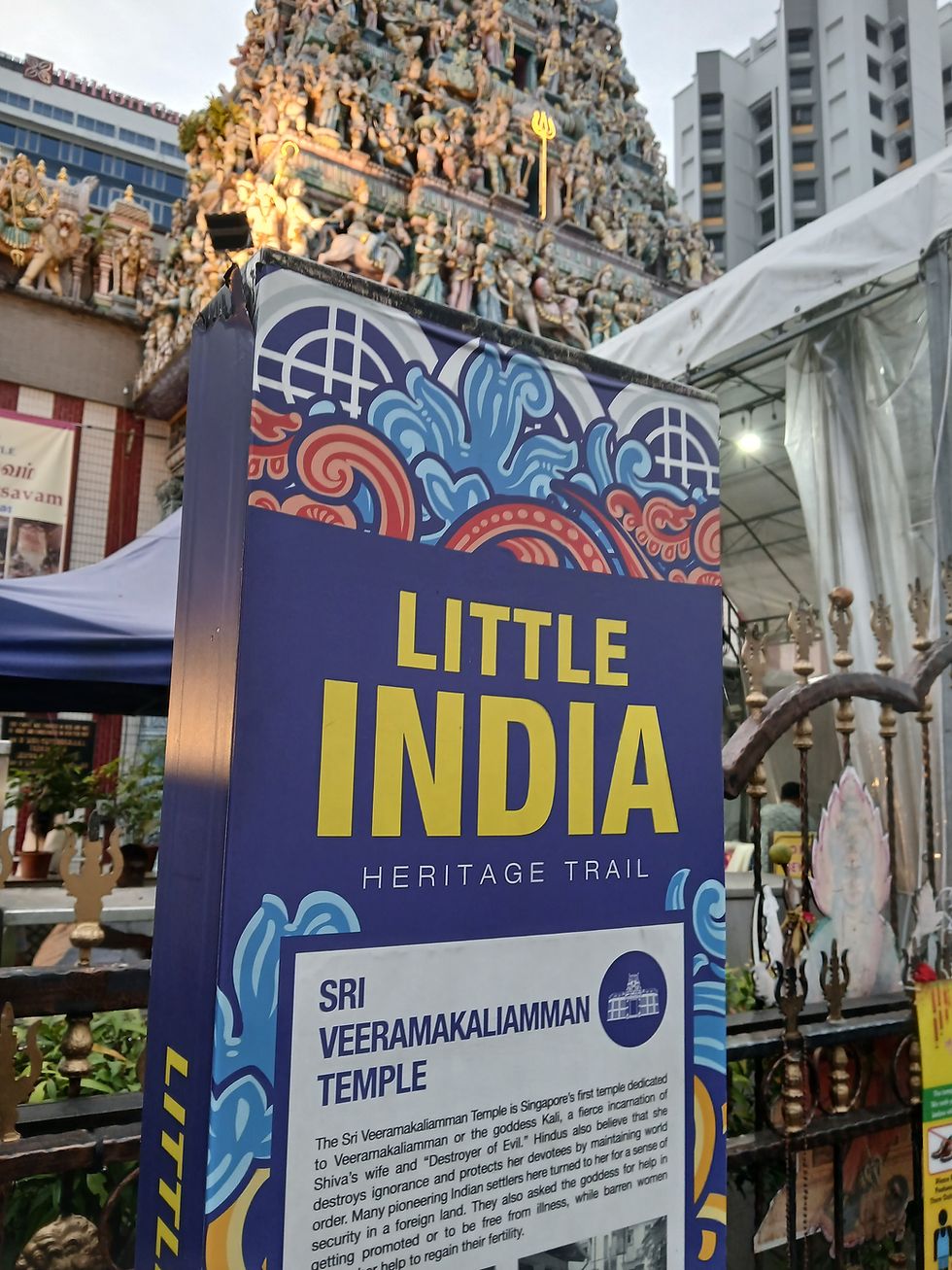
Temples anchor the neighbourhood’s spirit. The ornate gopuram of Sri Veeramakaliamman Temple and Sri Srinivasa Perumal Temple rise like memories carved in colour and myth. Dedicated to Goddess Kali and Lord Vishnu, they stand as Singapore’s important Hindu temples, a reminder that faith travelled with the indentured labourer and the merchant alike.

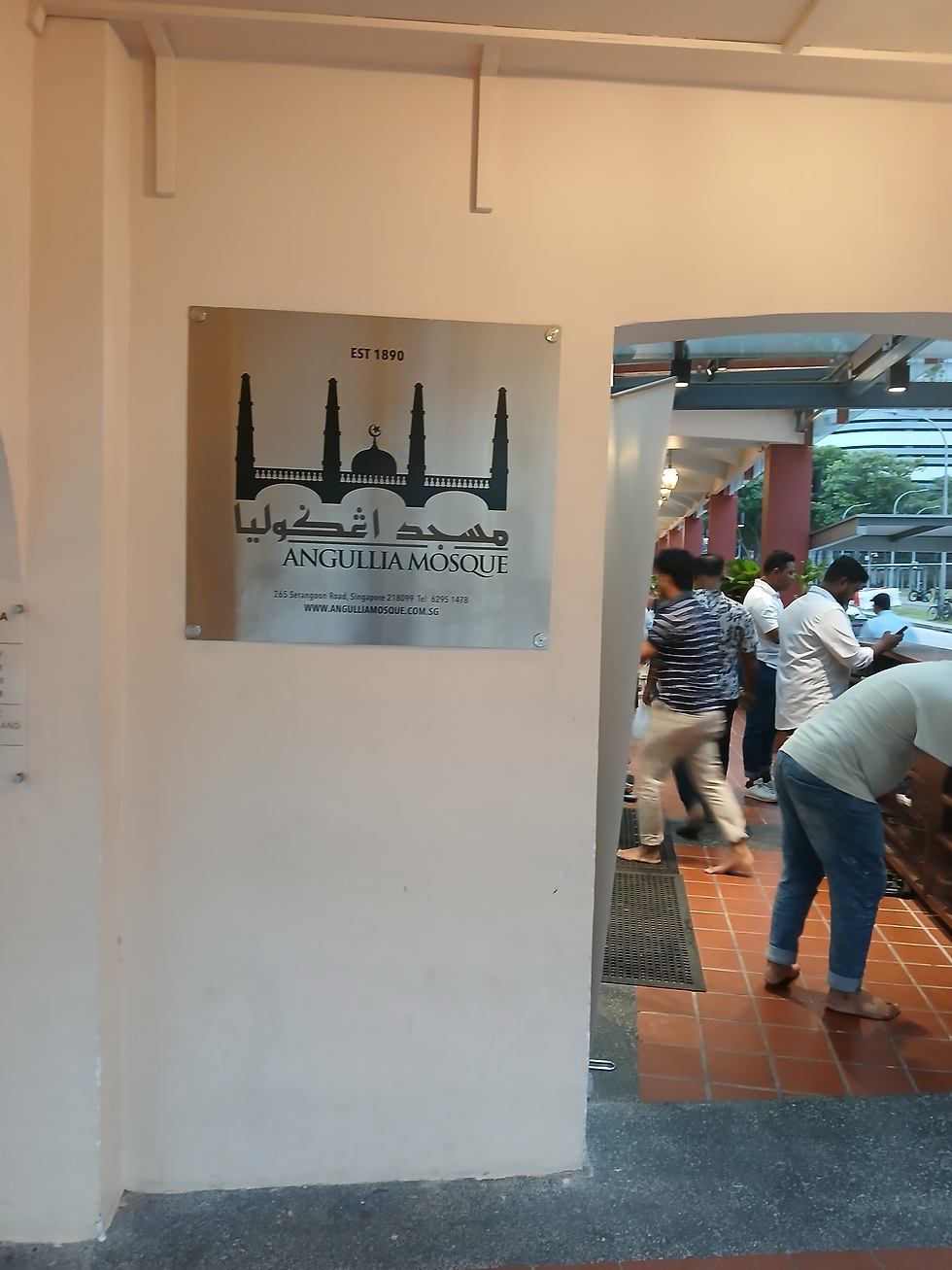
A mosque in the neighbourhood also draws the devout.
Not far away, the bustle around Mustafa Centre continues almost without pause — a 24-hour monument to migrant entrepreneurship, where spices, electronics, gold, and groceries coexist.
And then there are the smells — turmeric, incense, frying pakoras, sandalwood paste, sweets, jasmine, coffee, and milk tea.
This is not a sanitised India; it is the sensory India of bazars and temples.

One wonders: how does this atmosphere persist so far from the subcontinent?
The answer lies perhaps in continuity.
Migration here did not dissolve identity; it institutionalised it. Schools, temples, cultural associations, and businesses ensured that language and rituals were not museum pieces but daily practice.
All this happens even today, devoid of politics, I suppose!
Historically, the name ‘Singapura’ itself has Indic roots. According to the Malay Annals, a prince from Palembang — Sang Nila Utama — founded a settlement here in the 13th or 14th century and named it Singapura, ‘Lion City’, from the Sanskrit simha (lion) and pura (city).
Earlier still, the island was part of Indianised Southeast Asian societies influenced by the great maritime empire of Srivijaya, where Sanskrit culture and Hindu-Buddhist ideas flowed across seas.

There was no Indian king ruling modern Singapore in the political sense we understand today, but the civilisational imprint of India — linguistic, religious, cultural — has been present for over a millennium.
Here, thousands of miles from India, the scent of home and sandalwood linger — not as longing alone, but as enterprise, devotion, and community.
Yet, what struck me most this time was economic transformation. Compared to 2018, the number of gold jewellery shops have multiplied. Renovated façades gleam. Restaurants are crowded and brighter.
There is a sense of upward mobility — of a diaspora that has moved from survival to assertion.

Little India is no longer merely a relic of colonial segregation; it is a confident commercial hub integrated into Singapore’s disciplined urban order.
As Rakesh and I paused at an Indian restaurant for dinner, I reflected that this was not simply a transplanted India. It is India refracted through the shinging mirror of Singapore — orderly yet chaotic in pockets, nostalgic yet aspirational. It demonstrates how culture survives -- not by isolation but by adaptation.
Suresh Nautiyal is a seasoned journalist and environmentalist based in Pauri, Uttarakhand, and Delhi. This is the second part of a travel series from Singapore.
Photos by Suresh Nautiyal.