


END of a secular fantasy?

Book review: Francis Fukuyama saw an ending and mistook it for a universal horizon; Faisal Devji does not agree.
By Narendra Pachkhede in Toronto
For almost a decade, I have returned to what now strikes me as the most urgent philosophical question of our time: who is a; Muselmann? (I retain the historical spelling used by Primo Levi and other survivors.)
For Levi, writing in Se questo è un uomo ( If This is a Man) the Muselmann is not as metaphor, nor as archival remnant, but as diagnostic. The figure exposes a political order capable of reducing the human to the brink of disappearance.
Much inquiry into Islam and modernity rests on the assumption that Islam remains a political subject of history, able to act, resist, choose, or fail. Yet our century increasingly strains that premise.
The decisive question is no longer whether Islam will modernise, democratise, radicalise, decline, or revive, but the one Levi posed in a different register: who is the Muselmann?
Georgio Agamben later made this figure central to his account of modern sovereignty. For him, the Muselmann reveals what power becomes once its moral fictions fall away: the unconscious of modernity, the figure through whom its violence is laid bare.
To begin with, the Muselmann today is to recognise that our political present is structured by forms of abandonment that are global in scale, juridical in mechanism, and racialised in their targets. When entire populations are rendered killable in slow motion, when borders naturalise hierarchy, and when legal vocabularies collapse in the face of mass civilian death, Levi’s categories return.
In this context, asking “Who is a Muselmann?” becomes inseparable from the more urgent question: “Who is a Muslim?”

Faisal Devji’s proposition in Waning Crescent suggests that Islam, as a modern political actor, has reached the end of its historical role, highlighting the shift from political agency to ethical sensibility.
Not the end of belief.
Not the disappearance of Muslims.
But the exhaustion of a secular imagination that required Islam to function as a coherent ideological subject of history.
To understand what ends, and what takes its place, we must begin not in theology but in the political unconscious of modernity, where the Muselmann stands as the emblem of a world that no longer believes in its own universal claims.
Devji and the End of Islam as Historical Agent
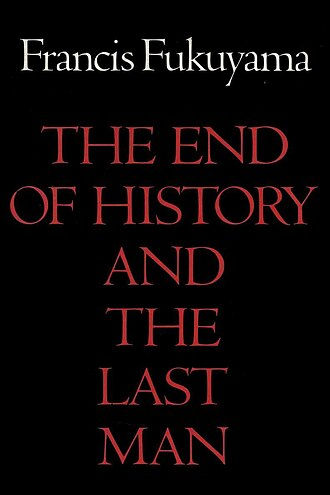
No sooner has Levi’s Muselmann forced us to confront the bleakest recess of modernity than another figure intrudes from a different theatre of historical imagination: Francis Fukuyama announcing in 1989 that history itself had reached its terminus. The Berlin Wall had fallen, communism had crumpled, and liberal democracy—clean, confident, impossibly self-assured—was declared the final vocabulary of human political aspiration.

It was a moment thick with triumphalism, a moment in which the West mistook geopolitical contingency for metaphysical certainty. Fukuyama wrote as though the world’s contradictions had not merely paused but resolved themselves; as though the twentieth century, with all its ruins and betrayals, had delivered a conclusive verdict in favour of universal liberalism.
It was an argument elegant in form and fantastical in content, a theory of history that required one to ignore most of the world to celebrate the rest. If Fukuyama mistook geopolitical contingency for the end of history, Devji’s intervention shows what happens when endist thinking migrates into the study of Islam itself, producing the illusion that Islam possesses a singular narrative arc capable of rising and declining.
Faisal Devji will have none of this.
Winning Crescent refuses the seductions of such endist thinking. Devji is not in the business of declaring epochs closed or certainties achieved. Where Fukuyama offers a victory hymn to liberal modernity, Devji offers a diagnostic excavation: a study of how Islam was transformed into a political protagonist, how that protagonist came to bear impossible conceptual burdens, and why its narrative arc may now be approaching exhaustion.
Fukuyama saw an ending and mistook it for a universal horizon; Devji sees an ending and recognises it as the conclusion of a specific, constructed, and contingent narrative form.
Problem of abstraction
Devji’s work has long revolved around a single conceptual anxiety: abstraction. In his earlier books, the question was how a political community becomes unmoored from place, memory or institutional form. In Muslim Zion, he showed how Pakistan’s constitutional imagination was deliberately lifted out of history and territory, unlike India’s nationalism, which drew legitimacy from land, soil and myth. Waning Crescent extends this concern to Islam itself, tracing how the shift marks one of the most consequential mutations of modernity.
This problem of abstraction is why the book’s original title, The End of Islam, named the argument more precisely. Devji had in mind a distinctly modern question: not whether Islam could be defeated theologically, but whether a religious tradition that had been remade as a historical agent could imagine its own end in historical time. The “end” thus carried a double meaning. It referred both to the culmination of Islam’s global mission and to the exhaustion of Islam as a protagonist capable of shaping world events.
The Press intervened, wary that the phrase would be misunderstood, yet Devji continues to use it in public because it more directly captures the conceptual riddle: a religion whose very abstraction renders it vulnerable to obsolescence.
To understand how Islam becomes a historical subject, Devji begins, characteristically, with poetry. In Mir Taqi Mir’s eighteenth-century verse, “He has daubed saffron on his forehead and sits in a temple, having long abandoned Islam”, devotion appears as an act of longing rather than identity.
Islam is a verb, not a category.

By the nineteenth century, that fluidity vanishes. Under colonial modernity, Islam acquires a capital “I” and enters the realm of civilizational discourse. Altaf Hussain Hali’s Madd-o-Jazr-e-Islam marks the rupture.
Where Mir expressed personal transcendence, Hali mourned Islam’s decline as a collective subject. Devji reads this moment as revolutionary. Islam becomes something that rises and falls, something that acts and can therefore fail. It becomes comparable to “the West,” to “Christendom,” to “civilisation”.

Talat Asad’s Formations of the Secular provides the essential armature of this transition. Asad shows how modernity renders religion an object of classification, governance, and abstraction. It becomes “a thing,” detachable from ritual life.
Devji inhabits this insight and extends it: once Islam is reimagined as a global abstraction, its theological core is hollowed out. God recedes to the margins;
Islam itself becomes an impersonal force, a metaphysical sovereign without metaphysics. It resembles God but can be defeated. It becomes something to be defended and worshipped, yet also something whose defeat can be mourned. A theological category becomes a political protagonist.
The consequences are profound. When Islam assumes the burden of agency, traditional theological authorities weaken. The collapse of kings and clerics produces a vacuum into which new actors step in.
Reformers, bureaucrats, military men and emergent capitalist classes begin to speak in Islam’s name precisely because Islam has been unmoored from the institutions that once grounded it.
As Islam becomes an ideology, its rivals—capitalism, communism, monarchy—also become abstractions. The terrain of struggle shifts from normative theology to metaphysical competition between systems.
The Paradox
Devji’s analyses of sovereignty in Pakistan and Iran expose the paradox. When Abul A’la Maududi insisted that sovereignty belongs to God alone, he effectively expelled sovereignty from the political order. Invested in God rather than the people, sovereignty reappeared spectrally in the form of the military coup and the Schmittian exception.
In Iran, Khomeini, with the doctrine of velayat-e faqih\, went the other way, vesting sovereignty in the state itself, even permitting the suspension of Islamic law in the name of welfare. In both cases, Islam as historical subject displaced God as theological sovereign, producing a politics in which the sacred was hollow yet omnipresent.
Violence follows not from theological excess but from ideological dislocation.
The gap between Islam’s inflated ideological agency and Muslims’ shrinking political agency creates a space in which violence becomes a compensatory act. It is the residue of a world in which Muslims are expected to carry the weight of an abstraction that no longer corresponds to their lived moral universe.
This is where Wael Hallaq and Devji map the problem from opposite sides. For Hallaq, Maududi’s project embodies the central contradiction of Islamic modernism. The modern State is not neutral, he argues; it is a comprehensive episteme that absorbs law, ethics, and social life under a single sovereign authority. No invocation of divine sovereignty can undo the structural reality that the State, in the Schmittian sense, remains the final arbiter.
Where Hallaq diagnoses the structural impossibility and Devji charts the historical arc.
For Devji, the emergence of “Islam” as a sovereign-like global actor, from anti-colonial movements to political Islam, was a historical improvisation forced by the collapse of Muslim empires. Thus, what Devji calls the “end of Islam” today is, in part, the exhaustion of this sovereign posture: Islam no longer functioning as the central protagonist of political struggle.
Devji reads this not as Islamic fanaticism but as modern impotence: violence emerges where political agency collapses. At the centre of Waning Crescent is the figure Devji names the anti-political Muslim subject. This believer renounces State power, not out of quietism but out of ethical suspicion. This subject refuses sovereignty to protect transcendence, knowing that power contaminates the sacred.
This is not a resignation. It is a moral refusal.
This, for Devji, marks the juncture at which his work departs from that of Cemil Aydin. He charts the emergence of the “Muslim world” as a civilisational category forged under imperial and colonial pressures. He maps the construction of the idea.
Devji takes the next step: he maps the moment when that idea begins to act, when Islam becomes a historical subject endowed with agency, vulnerability, and ideological rivals. And he traces the slow dissolution of that subject into market rationality, global capitalism, diasporic cultural forms, and the post-sovereign figures who inherit its debris.
Aydın gives the discursive genealogy; Devji gives the arc of agency, abstraction, and decline. Their projects meet in the contemporary terrain of Muslim globality, where capital, culture, and diplomacy replace the older universals of empire and ideology, and where Islam’s afterlife unfolds not as a programme but as a dispersed moral sensibility.
It is against this backdrop that the problem of Gaza becomes legible.
Devji argues that Islam’s long career as a world-making subject is now in eclipse. The modernist, Islamist and jihadist projects he examines sought to fold Muslim life into a universal Islamic agency. Today, those projects appear spent.
Across the uprisings of the twenty-first century—from Cairo and Tehran to Delhi and, most recently, the global mobilisations for Gaza—the political imagination no longer invokes Islam as banner or battleground. The dominant language has become that of human rights, genocide, international law and global justice.
Even in a catastrophe saturated with Islamic affect, Islam itself is not the organising principle of political action. The few exceptions, such as the Iranian State, only underline the rule.
But what happens when a tradition shaped by such suspicion encounters the storms of the modern world?
What becomes of agency when believers refuse the only political forms on offer?
Devji answers that 'the end of Islam' marks the end of a particular secular fantasy, not the end of Muslim political life.
Narendra Pachkhede is a writer and critic who splits his time between Toronto, London and Geneva.
This is the first part of a two-part series/book review -- a scholarly and unbiased analysis of global Islam in the contemporary era.
Courtesy Naked Punch