


Don’t restrict your daughters, educate your sons
Updated: 3 hours ago
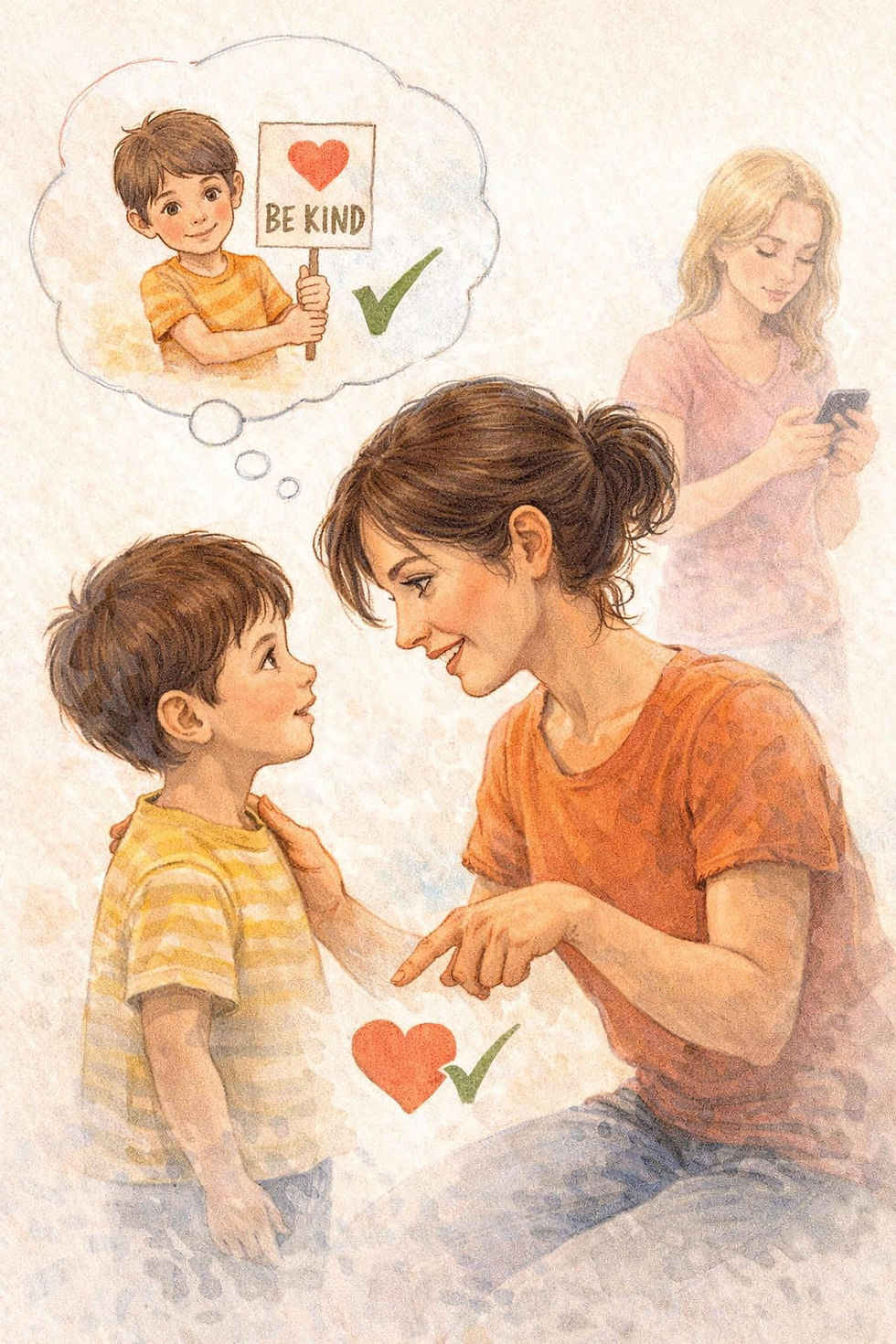
The girls and boys who marched at midnight: What the Internet can teach us about emotions and ethics.
By Antara Chandra
Editor's Note: It's been one year since the launch of Independent Ink. Henceforth, we will showcase some of the finest articles published on our pages since August, 2025. For our new readers who missed them. And for those, who would perhaps like to read the articles again. Thank you.
The video had stopped me mid-scroll: schoolgirls and boys, no older than ten, marching through Kolkata’s streets past midnight, their small voices demanding justice for Abhaya. What happened in Bengal following the August 2024 rape and murder of a resident doctor might have showed us that the internet, for all its chaos, might be one of our most powerful tools for teaching the next generation about kindness, equality, and gender consciousness.
A New Literature of Experience
When women began sharing their stories in comment sections across India, childhood molestations by relatives, workplace harassment, and violations that had never been named, something shifted. This wasn’t just venting. It was what feminist scholar Elaine Showalter might recognize as a form of women’s authorship emerging from digital space.
Showalter discussed how Helene Cixous’s concept of écriture féminine explored writing that captures the psychological and socio-cultural signatures of female experience. Women’s writing on the internet, coming from raw, previously untold spaces, is creating a body of literature with empirical, statistical, and clinical value — a record of lived experience that transcends individual testimony.
This echoes what Laura Bates started in 2012 with the Everyday Sexism Project, a platform where thousands of women catalogued daily experiences of harassment and discrimination. But today’s digital confessionals are different in scale and immediacy.
When an influencer posts about childhood abuse within families and receives thousands of responses from women sharing parallel experiences, it creates visibility that wasn’t possible a decade ago. These aren’t isolated incidents anymore; they are patterns, data points, evidence of systemic problems that demand systemic solutions.
The internet in India is no longer a separate experience; it is an intricate part of everyday discourse and sensibility. Which means these digital confessions, these shared stories, these comments sections, full of pain and recognition, are shaping how an entire generation understands gender violence.
Not as isolated tragedies, but as predictable outcomes of conditioning we can choose to interrupt.

The Accidental Curriculum
Those children weren’t in the streets because of formal education. They were there because social media created an informal curriculum reaching them on their phones. A mother in Mumbai watches a viral video about raising sons to respect boundaries and shares it. Her network discusses it in WhatsApp groups, shows it in classrooms, references it at dinner.
Influencers create content explaining the male gaze, and teenagers who have never encountered feminist theory begin recognizing patterns. This is distributed learning — ideas multiplying across networks, gaining legitimacy from repetition and diverse sources, reaching children during their formative years when worldviews are still malleable.
Teaching What Schools Won’t
The National Commission for Women created a gender sensitization module for Indian schools in 2019, covering patriarchy, violence, and consent. But curriculum reform is slow and its reach limited.
Digital media moves faster and wider. When content creators post about childhood conditioning, teaching boys emotional literacy, raising daughters who understand agency, this content circulates immediately, reaching households across class and geographic divides. Parents who never learned these frameworks themselves suddenly have language for dynamics they have always felt but couldn’t articulate.
The most powerful shift: posts stating “don’t restrict your daughters, educate your sons.” This reframes responsibility: gender safety isn’t a problem women solve by limiting freedom, but one parents solve by raising children differently.

Building Consciousness Through Exposure
Those children marching at midnight were absorbing a broader message through accumulated exposure: that women’s safety matters enough to lose sleep over, that men and boys have a role in ensuring it, that speaking up against injustice is worth the discomfort.
This is how consciousness shifts, not through single moments of instruction, but through sustained exposure to alternative narratives.
When a child sees thousands of adults validating survivors’ stories instead of questioning them, when they watch men publicly commit to unlearning harmful behaviours, when they have access to language for naming abuse: these exposures accumulate into a different baseline understanding of normal.
The digital space is creating what we might call a flow of consciousness — a continuous stream of perspectives, stories, challenges, and affirmations that shape how people, especially young people, understand gender. This flow crosses boundaries that traditional education systems can’t: it reaches rural areas and urban centers, it includes working-class voices alongside privileged ones, it allows women who have never spoken publicly to contribute their experiences alongside activists and scholars.

The Guidance Parents Are Finding
Perhaps most critically, digital platforms are becoming resource libraries for parents trying to raise children differently than they were raised. A father posts about teaching his son to identify and reject misogynist jokes—hundreds engage, sharing strategies. A mother describes bringing her daughter to a protest—others screenshot it, adapt it to their contexts.
This crowd-sourced wisdom is accessible in ways formal resources often aren’t. The encouragement flows both ways: parents uncertain about difficult conversations see others doing so and find permission. Women who have never participated in public discourse watch housewives speaking up and recognize their own right to voice.
What We Choose to Build
The tragedy that sparked those midnight marches will fade from headlines, but the infrastructure it revealed — this network of digital discourse, parental guidance, childhood exposure to equality frameworks — doesn’t have to. The digital space, for all its flaws, is creating possibilities for consciousness-raising that simply didn’t exist before.
It’s not replacing traditional activism or education: it’s supplementing them, reaching people and places they can’t, operating at a pace and scale they never could. We can choose to build on this: create more content that teaches kindness alongside competence, amplify voices that challenge normalized harm, use these platforms not just to document violence but to model alternatives as to how gender violence is everyone’s problem to solve.
The question isn’t whether digital media will solve gender violence alone — it won’t. The question is whether we will use it deliberately to interrupt the transmission of harm from one generation to the next, creating a flow of consciousness that promotes respect and equality before children encounter systems teaching them otherwise.
Those children marching at midnight showed us the next generation is watching, learning, internalizing. What they internalize is, at least partially, up to us. The feeds will keep scrolling. The question is what we choose to put in them.
Antara Chandra is an English major from St. Xavier’s College, Kolkata, and holds a Master’s degree from the University of Calcutta, along with a PhD in English Literature from NIT Goa. She loves books, cinema, and nature. She is passionate about environment and gender equity.